
千字文 in 42 cards › Card 38
Card 38 of 42 · lines 223–228
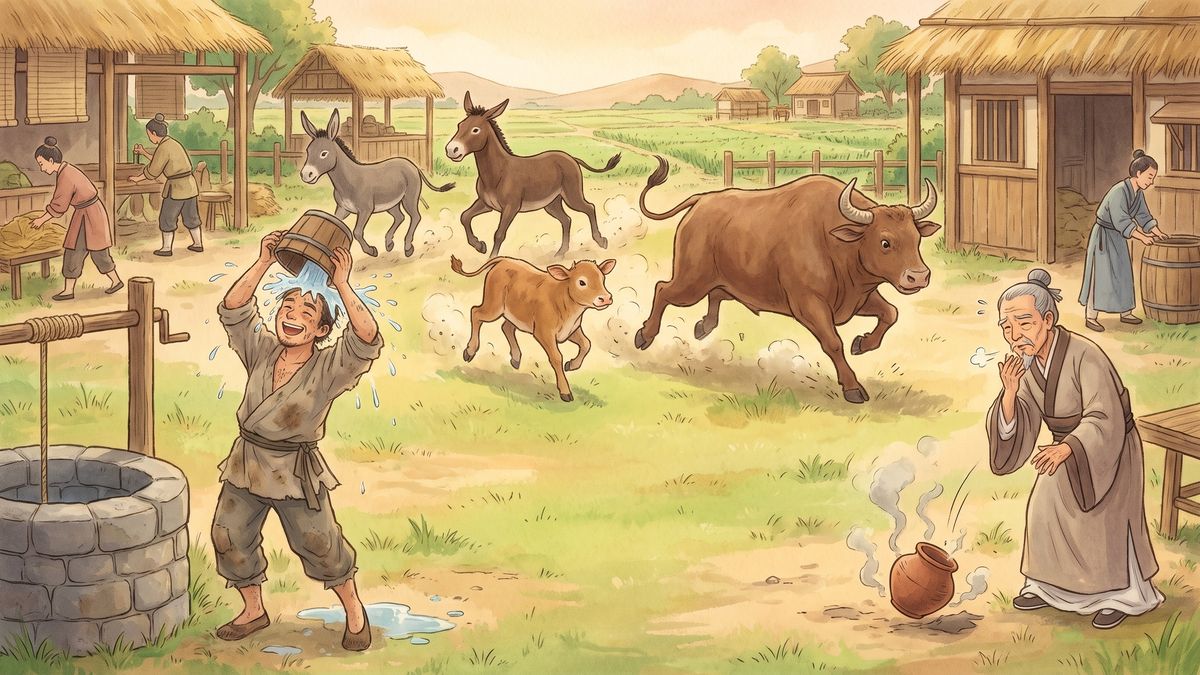
骸垢想浴 执热愿凉
Pinyin
English
223
骸
垢
想
浴
body
dirty
long for
a bath
When the body is dirty we long for a bath;
224
执
热
愿
凉
hold
something hot
wish for
coolness
holding something hot, we wish for coolness.
225
驴
骡
犊
特
donkey
mule
calf
bull
Donkeys and mules, calves and bulls
226
骇
跃
超
骧
startled
leap
jump over
gallop
start up, leap and gallop away.
227
诛
斩
贼
盗
punish by death
behead
robbers
thieves
Robbers and thieves are put to death;
228
捕
获
叛
亡
catch
capture
rebels
runaways
rebels and runaways are caught.
Two or three days with this card 练习
- First day: copy and read. Copy each couplet once by hand, slowly, stroke by stroke. Read it aloud with the pinyin: the small strokes under the characters show the melody of the line.
- Second day: recite. Say each couplet two or three times without looking: one line, one breath. If you slip, finish the line, then say it again.
- A third day if you need it. Recite all six lines in one go, then write two of them from memory. Move on when the card sits.
Weave back 温故
Before you start this card, say these again from memory. Look only when you are stuck.
The card before: card 37
- 嫡后嗣续The sons of the first wife carry on the line
- 祭祀烝尝and make the offerings of the seasons.
- 稽颡再拜They touch the forehead to the ground and bow twice,
- 悚惧恐惶in awe and reverent fear.
- 笺牒简要Letters should be short and to the point;
- 顾答审详answers careful and complete.
Four cards back: card 34
- 易輶攸畏Careless, light talk is a thing to fear:
- 属耳垣墙there are ears pressed to the wall.
- 具膳餐饭When a meal is prepared and eaten,
- 适口充肠it only needs to please the taste and fill the stomach.
- 饱饫烹宰The well fed are tired even of fine meats;
- 饥厌糟糠the hungry are content with dregs and chaff.