
千字文 in 42 cards › Card 32
Card 32 of 42 · lines 187–192
欣奏累遣 戚谢欢招
Pinyin
English
187
欣
奏
累
遣
joys
gather
cares
are sent away
then joys gather and cares are sent away,
188
戚
谢
欢
招
sorrow
takes leave
gladness
is called in
sorrow takes its leave and gladness comes.
189
渠
荷
的
历
pond
lotus
bright
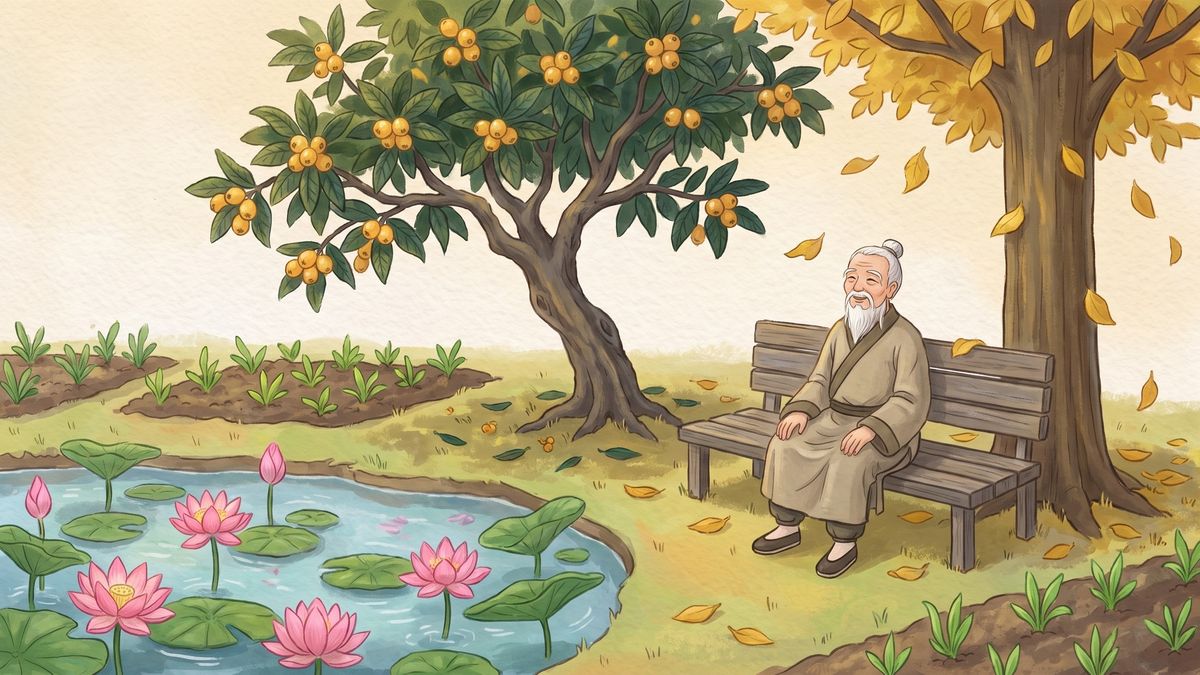
The lotus in the pond stands bright;
的历 (dì lì) means bright and clear.
190
园
莽
抽
条
garden
thick grass
put out
shoots
the plants in the garden put out new shoots.
191
枇
杷
晚
翠
loquat
late in the year
green
The loquat is still green late in the year;
192
梧
桐
蚤
凋
parasol tree
early
wither
the parasol tree loses its leaves early.
蚤 stands for 早 (early).
Two or three days with this card 练习
- First day: copy and read. Copy each couplet once by hand, slowly, stroke by stroke. Read it aloud with the pinyin: the small strokes under the characters show the melody of the line.
- Second day: recite. Say each couplet two or three times without looking: one line, one breath. If you slip, finish the line, then say it again.
- A third day if you need it. Recite all six lines in one go, then write two of them from memory. Move on when the card sits.
Weave back 温故
Before you start this card, say these again from memory. Look only when you are stuck.
The card before: card 31
- 两疏见机The two Shus saw the right moment
- 解组谁逼and laid down their seals of office: who forced them?
- 索居闲处To live alone and at leisure,
- 沉默寂寥in silence and stillness;
- 求古寻论to seek out the ancients and study their words,
- 散虑逍遥to let worries go and wander free:
Four cards back: card 28
- 治本于农Good government is rooted in farming:
- 务兹稼穑attend to sowing and reaping.
- 俶载南亩The work begins in the southern fields;
- 我艺黍稷I plant my millet.
- 税熟贡新The ripe grain is taxed and the new harvest offered in tribute;
- 劝赏黜陟the diligent are rewarded and promoted, the idle demoted.